
Tips
Auto Repair Shop Glossary: Work Order, Bay, RO, DVI and More

Meiket Team · November 20, 2026
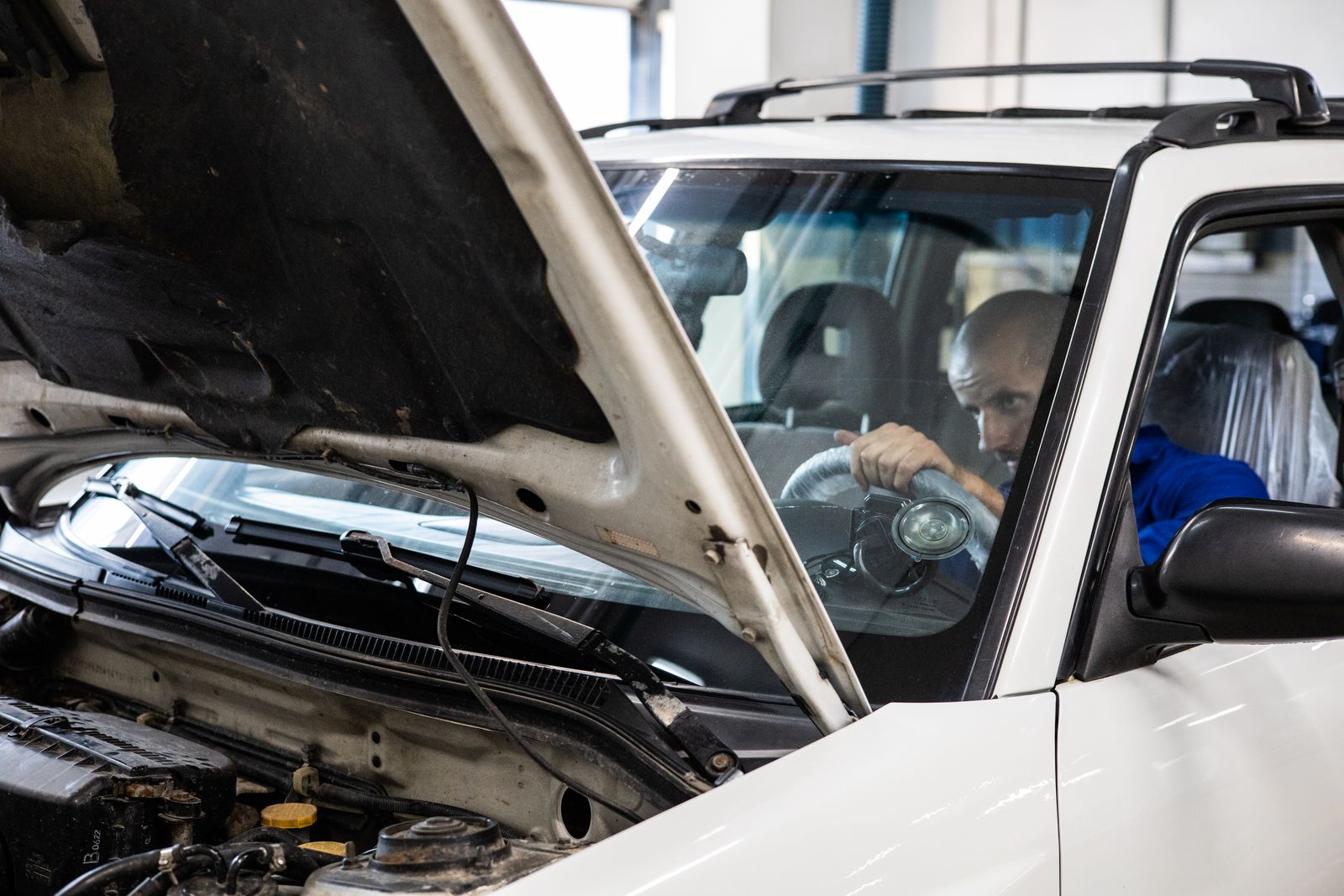
New hires nod along in their first week when someone says “pull the RO” or “is the DVI done yet,” then go ask someone else what it actually means. Even owners mix up terms their own software renders differently — one system calls it a work order, the next calls the same document a repair order, and a third shows both on different screens. This glossary is the one page you can point a new advisor, tech, or manager to and not have to repeat yourself.
Terms are grouped the way they actually come up: paperwork at the counter, what happens on the shop floor, and the money terms that show up in reporting. Each one is defined the way it’s used day to day, not the way a textbook would phrase it.
Counter and paperwork terms
This is the vocabulary that lives between the customer and the front desk — the documents and labels that move a job from “car just pulled in” to “ready for pickup.”
Work order (WO) — The single record that tracks one customer’s job from intake to close: customer and vehicle info, requested work, parts, labor, status, and final invoice. In most modern shop software, “work order” is the umbrella term for the whole job record.
Repair order (RO) — Functionally the same document as a work order in almost every shop. The term is older and still shows up heavily in dealership service departments and legacy software; “RO number” and “work order number” usually point to the exact same field. If your team uses both terms interchangeably, that’s normal — just make sure everyone agrees it’s one document, not two.
Estimate — The proposed price and scope before the customer approves anything. An estimate becomes part of the work order once it’s approved — it isn’t a separate system, it’s a stage the same record passes through.
Approval — The customer’s sign-off on the estimate, by signature, phone call, text, or portal tap. Until approval happens, a tech shouldn’t touch anything beyond the diagnosis the estimate was based on — doing extra “while we’re in there” work without approval is one of the fastest ways to generate a chargeback dispute or a furious phone call.
Invoice — The final, closed-out version of the work order after the job is done and approved charges are locked in. A work order becomes an invoice; it’s the end state, not a separate document you create from scratch.
DVI (Digital Vehicle Inspection) — A structured, usually photo- or video-backed inspection a tech runs on every vehicle, checking things like brake pad depth, tire tread, fluid levels, and belts — then flags each item green (fine), yellow (watch it), or red (needs attention now). A DVI exists to make the “found this too” conversation visual and credible instead of a tech’s word against a skeptical customer.
MPI (Multi-Point Inspection) — Nearly the same concept as a DVI, usually without the photo/video layer — a checklist run against a fixed number of points (21-point, 50-point, etc.). Many shops use “DVI” and “MPI” to mean the same thing; the real distinction is whether photos/video are attached.
Shop floor terms
These are the words that describe physical space, people, and the sequence a vehicle moves through once it’s past the counter.
Bay — A single service stall where one vehicle is actively being worked on. “How many bays are open” is really asking “how much capacity do we have right now” — it’s the unit everything else in scheduling is built around.
Tech (Technician) — The person doing the physical repair work. Distinct from the advisor, who manages the customer relationship, writes up the estimate, and communicates status — a shop runs on the handoff between these two roles working cleanly.
Advisor (Service Advisor) — The person at the counter who intakes the vehicle, builds the estimate, gets approval, and keeps the customer updated. In a one-person shop the owner often plays both advisor and tech; in a growing shop, splitting these roles cleanly is usually the first real scaling decision.
Comeback — A vehicle that returns because the original repair didn’t fully fix the problem, or a related issue surfaces shortly after. Comebacks are tracked separately from new jobs because a rising comeback rate usually points to a diagnosis problem, not a bad-luck streak — it’s a metric worth watching, not just an annoyance to absorb.
Sublet — Work the shop can’t perform in-house and sends to an outside specialist (alignment, upholstery, certain diagnostics) while staying the customer’s single point of contact. Sublet costs still show up on the work order; the shop is managing the vendor relationship, not disappearing from the job.
Turnaround time — How long a vehicle sits from intake to ready-for-pickup. This is the number customers feel most directly, and it’s usually the first thing that breaks down when bay scheduling is done by gut feeling instead of real data.
Money and reporting terms
These are the terms that show up once you step back from a single job and start looking at how the shop is actually performing.
ARO (Average Repair Order) — Total revenue from repair orders divided by the number of orders in a given period. It’s the single most-watched number in shop management software because it moves with both pricing and upsell discipline — a rising ARO usually means advisors are presenting inspection findings well, not just raising prices.
Labor rate — What the shop charges per hour (or per “flat rate” hour — see below) for labor, separate from parts cost. Shops that haven’t recalculated their labor rate in years are often charging less than their real overhead requires without realizing it.
Flat rate — A fixed number of billed labor hours for a given job regardless of how long the tech actually takes — the industry-standard way to price labor on common repairs so a fast tech isn’t penalized and a slow one doesn’t inflate the bill.
Parts markup — The percentage or dollar amount added to a part’s cost before it’s billed to the customer. This covers sourcing, handling, and warranty risk on the part — it’s not pure profit, even though it can look that way on a spreadsheet.
Diagnostic fee — A separate charge for the time spent figuring out what’s wrong, before any repair estimate exists. Waiving this too often on jobs that don’t convert is a quiet way shops lose money on diagnostic-heavy repairs like electrical or intermittent issues.
Chargeback — A disputed credit card charge the customer’s bank reverses, usually because the customer claims they didn’t authorize the work or didn’t receive what was described. Clean, timestamped approval records (digital or signed) are the main defense — this is part of why “approval” above is worth treating as a real checkpoint, not a formality.
Important: None of these terms are specific to any one piece of software — they’re industry vocabulary. The point of a system like Meiket isn’t to rename any of this; it’s to make sure a work order, its DVI, its approval, and its final invoice live in one place instead of across a clipboard, a text thread, and three different tabs.
FAQ
What's the real difference between a work order and a repair order?
In almost every shop, none — they’re the same document under two different names. “Repair order” is the older, dealership-era term; “work order” is more common in independent-shop software today. If your team hears both, it’s worth confirming out loud that everyone means the same record, so nothing gets tracked twice by accident.
Is a DVI the same thing as an MPI?
They’re nearly identical in practice. Both are structured inspections run against a checklist of points on the vehicle. The main difference is that “DVI” usually implies photos or video are attached to back up the findings, while “MPI” can be a plain checklist without media — but many shops use the two terms interchangeably.
Why does my shop's ARO matter if I'm already busy?
Being busy and being profitable aren’t the same thing. ARO tells you how much revenue each job is actually generating on average — if it’s flat or dropping while you’re just as busy, it usually means inspection findings aren’t being presented well or pricing hasn’t kept up with real costs, not that your shop lacks demand.
What counts as a comeback versus a totally new, unrelated problem?
A comeback is when the original issue wasn’t fully resolved or a closely related part failed shortly after the repair — the kind of thing a customer reasonably connects to the work you just did. A new, unrelated failure on the same vehicle weeks or months later usually isn’t counted the same way. The exact cutoff is a judgment call most shops set for themselves and apply consistently.
Do I need separate software to track DVIs, or is that part of the work order?
A DVI should live inside the same work order as everything else for that vehicle — not as a separate app or a printed sheet that gets handed over later. Keeping it attached to the record means the advisor can show the customer exactly what was found, when, without digging through a different system.
What's the one term on this list most shops define differently?
“Comeback.” Some shops only count it if the exact same symptom returns within 30 days; others count any related failure within 90. There’s no single industry-wide standard — the important part is picking one definition and tracking it consistently, since it’s one of the clearest early signals of a diagnosis problem.